
Brands as people, people as masks
brands as simulated people, media & art as the creation of worlds, zojirushi rice cooker, clowning's neutral mask, what forms the characters of our self and of others

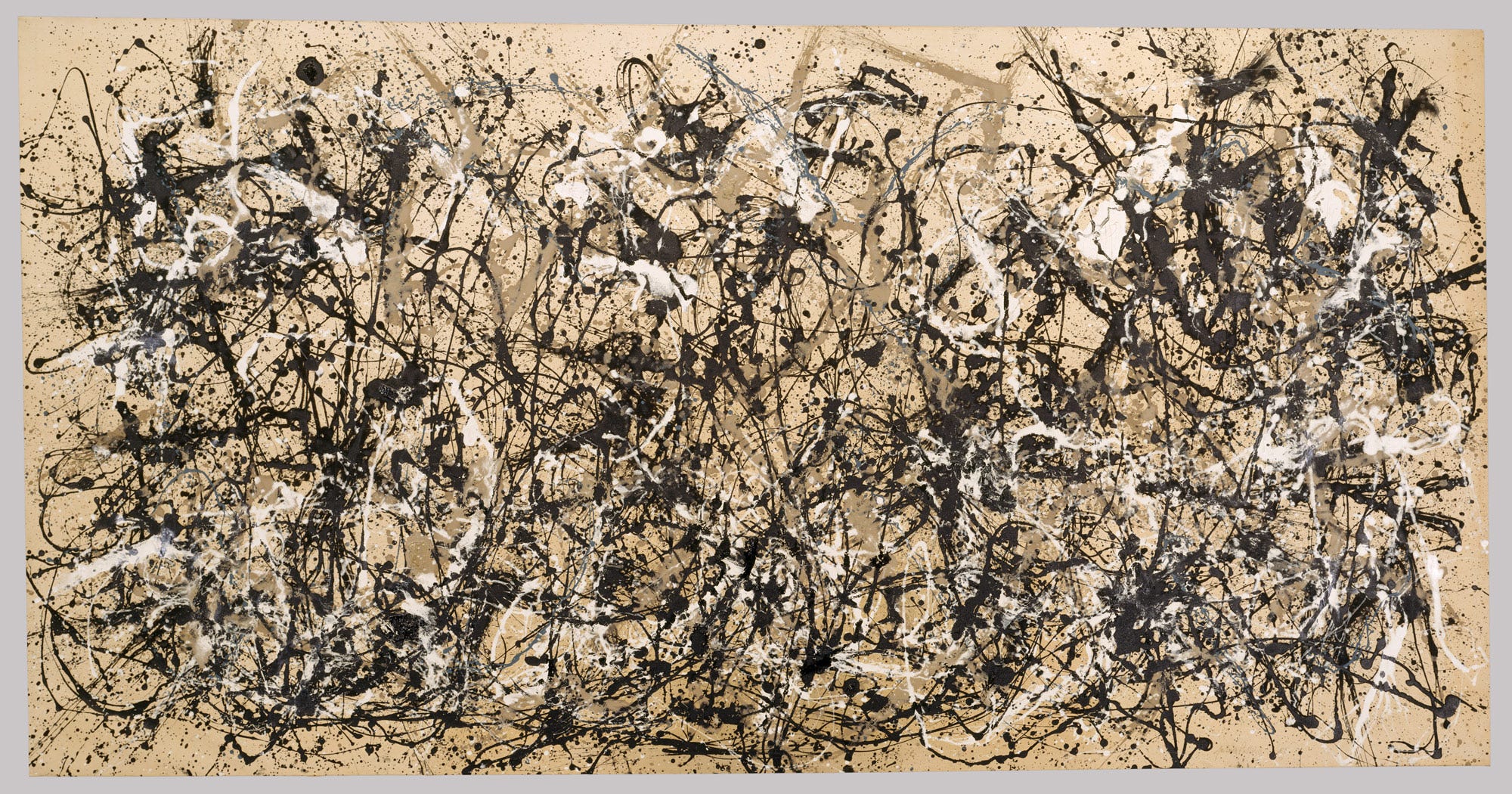
Jackson Pollock, Convergence, 1952
The way to ‘get’ a Pollock is to stare at it. Every piece of media creates a world — subway posters as one in which you exist in for 3 seconds, films for an hour or two, social media for months, even years. We’re impacted less like being shoved and more like entering a haunted mansion. You understand media, and so too art, by inhabiting it and soaking in how its air and creatures and rules of gravity affect you. When it’s too overwhelming (as contemporary art is for most people), it registers as noise. When it really hits on something deep within you, you are transformed. The best relationships are like this — an art, a world.

To create a brand is to create the simulation of a person. If you imagine talking to Apple, it would emote quite differently from Disney (I think this is why the sloppification of Disney’s output is particularly jarring — the machine behind the magic claws through, and you realize that it’s most definitely not your friend). Branding can be thought of as the public arm of art, which then makes sense of why trends happen — that’s the quick and dirty way of hitting the resonance button by leaning on symbols and patterns that are already established as signaling some attitude the broader population wants.
People love the Zojirushi rice cooker. It’s not just because it’s the best rice cooker, but like many Japanese appliances it makes cute beep boops that somehow strike directly at endearing, vs their American counterparts whose tunes feel annoying.
In clowning, you have the ‘neutral mask’, and every little quirk and deviation from that (chest slightly more in, a particular sway in your walk) adds to how the character that is you appears in the world; infinite variation and infinite nuance.
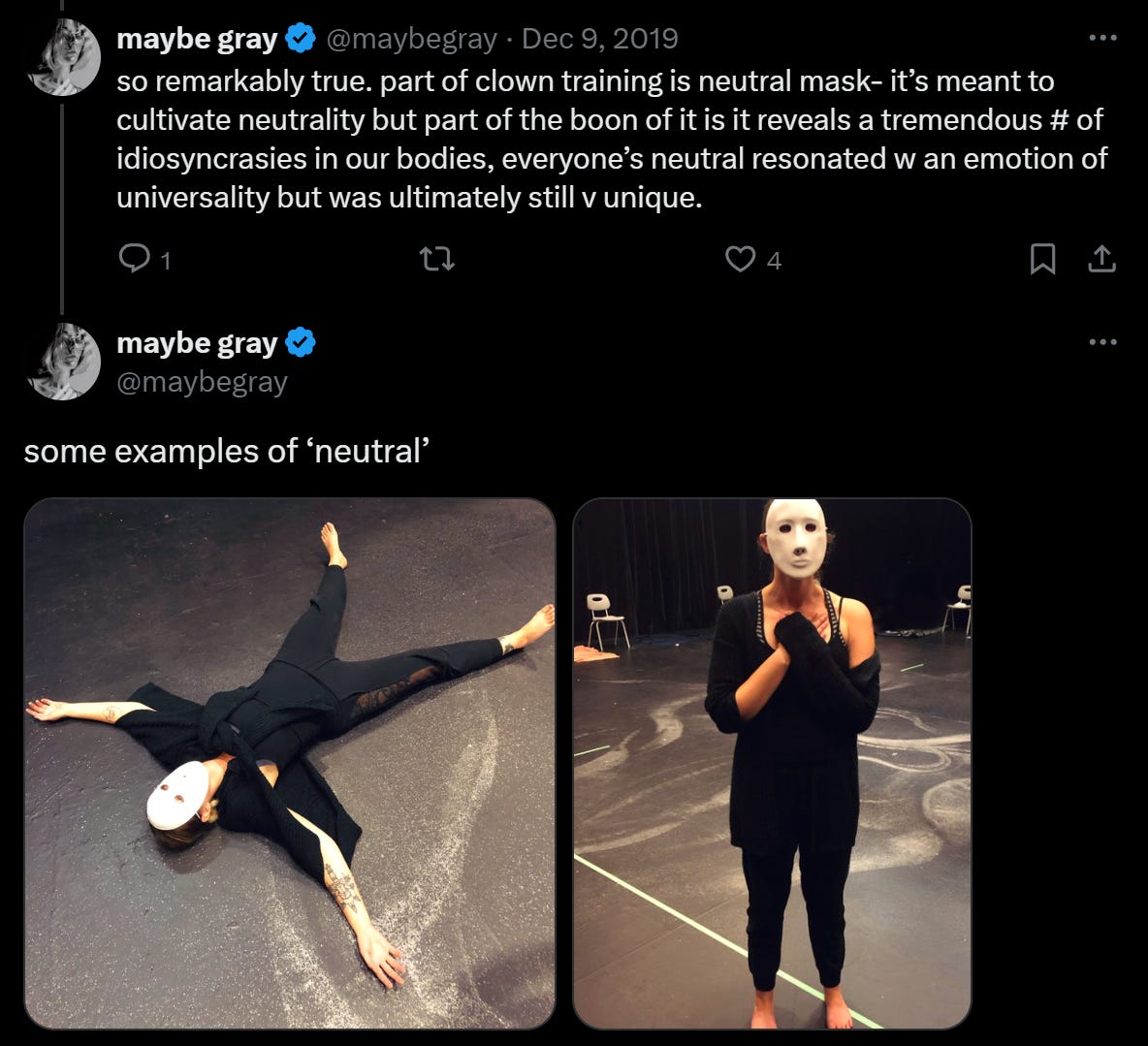
Tweet source
The ways we react to the world — especially those that are repeated — form our character; perhaps you do so quietly, or with fury, or with a question. If you want to change who you are, see how consistently changing one of such tendencies affect you.1
The ways we react to the world also forms other people’s characters. Similar reactions to someone solidify how they’re generally perceived (suave or quirky or funny), but what’s most instructional is when the response is split (abrasive vs refreshingly honest). The extreme of this is that all our opinions of somebody is a projection, a piece of our own machinery peeking through — of how we function, of how make sense of the world. This doesn’t make it fake and arbitrary; it makes it definitely useful and relevant to you specifically, and sometimes to others too.
I leave you with these questions: what kind of rice cooker are you? What is your shape, what is your tune?
Emotional reactions are difficult to rewire, but actions are more tangible. Changing a response starts showing you something about what you were originally doing. Changing the response in the same way starts showing you something about what you're instead doing.